
Jean-Michel Basquiat
American Neo-expressionist artist who rose to fame in the 1980s.

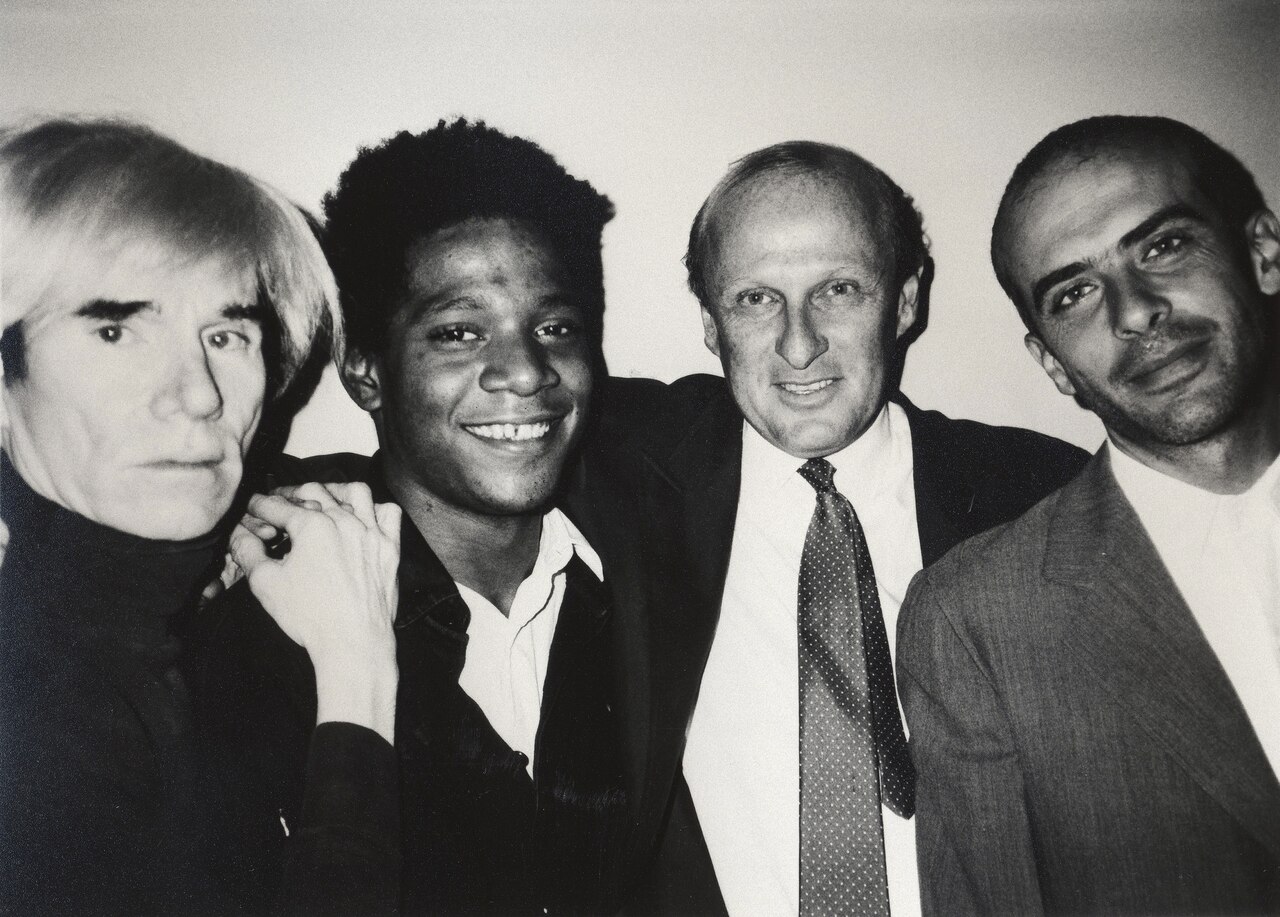
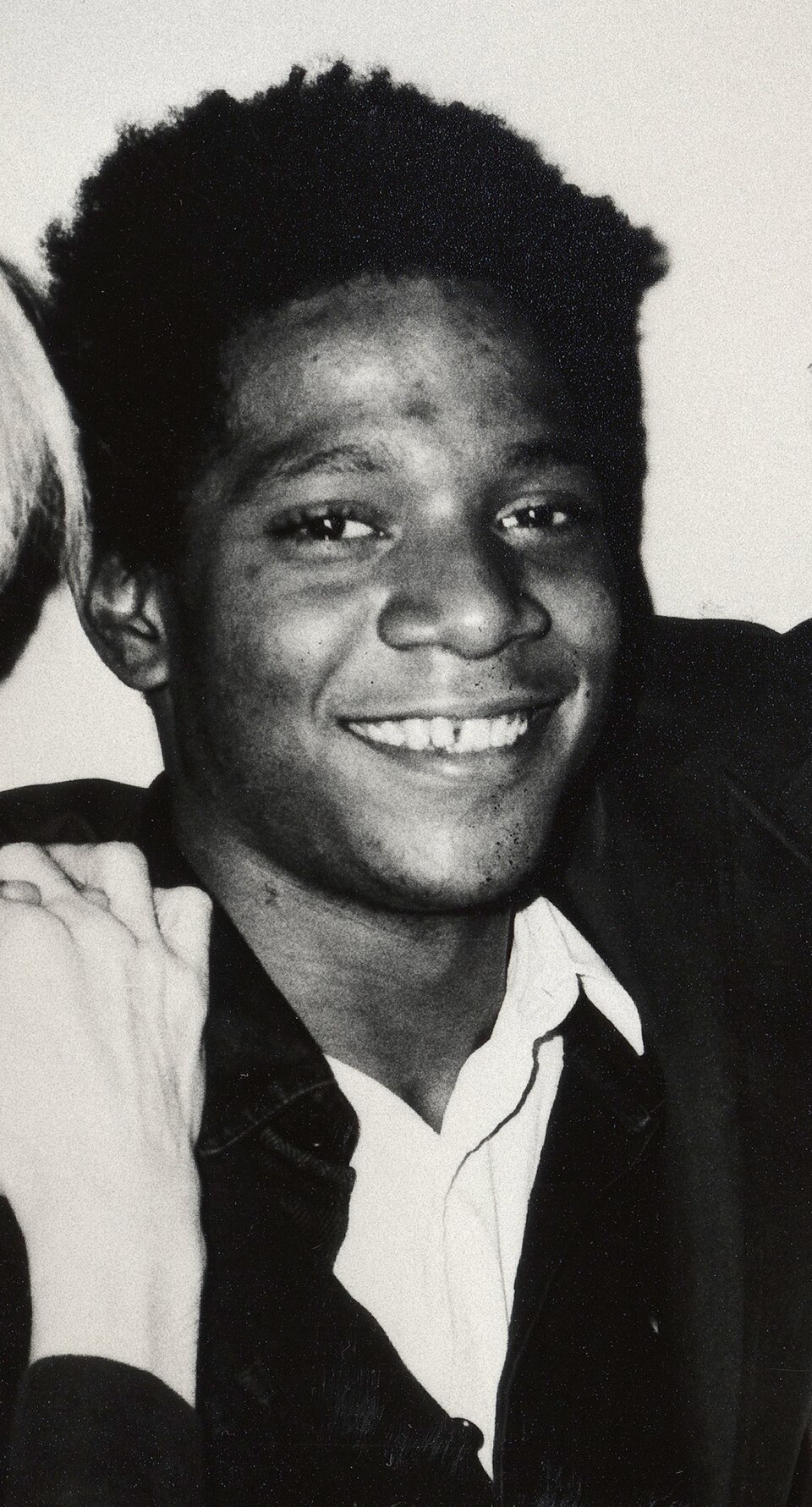
Galerie Bruno Bischofberger · CC BY-SA 4.0
Jean-Michel Basquiat ( BAH-skee-AH(T), French: [ʒɑ̃ miʃɛl baskja]; December 22, 1960 – August 12, 1988) was an American artist who rose to success during the 1980s as part of the Neo-expressionism movement. He first achieved notoriety in the late 1970s as part of the graffiti duo SAMO, alongside Al Diaz, writing enigmatic epigrams all over Manhattan, particularly in the cultural hotbed of the Lower East Side where disco, punk, and street art coalesced into early hip-hop culture. By the early 1980s, his paintings were being exhibited in galleries and museums internationally. At 21, Basquiat became the youngest artist to ever take part in Documenta in Kassel, Germany. At 22, he became one of the youngest to exhibit at the Whitney Biennial in New York.
- born
- December 22, 1960, Park Slope, Brooklyn, New York City
- died
- August 12, 1988, of a heroin overdose
- nationality
- American
- known_for
- Neo-expressionism, SAMO graffiti duo, social commentary on racism and power stru
Verified Timeline
Lore & Background
Basquiat was born on December 22, 1960, in Park Slope, Brooklyn, New York City, to a Haitian father and a Puerto Rican mother. He was a precocious child who learned to read and write by the age of four. At age seven, he was hit by a car while playing in the street, suffering a broken arm and internal injuries that required a splenectomy; while hospitalized, his mother brought him a copy of Gray's Anatomy. After his parents separated that year, he and his sisters were raised by their father, and his mother was admitted to a psychiatric hospital when he was ten. By age 11, Basquiat was fluent in French, Spanish, and English. He ran away from home at 15 after his father caught him smoking cannabis, sleeping on park benches at Washington Square Park. In the 10th grade, he enrolled at City-As-School, an alternative high school in Manhattan, where he developed the character SAMO with schoolmate Al Diaz as an abbreviation for 'Same old shit.' In May 1978, Basquiat and Diaz began spray painting graffiti on buildings in Lower Manhattan under the pseudonym SAMO, inscribing poetic and satirical slogans such as 'SAMO© AS AN ALTERNATIVE TO GOD.' In June 1978, Basquiat was expelled from City-As-School for pieing the principal. At 17, his father kicked him out of the house when he decided to drop out of school. He worked for the Unique Clothing Warehouse in NoHo while continuing to create graffiti at night. On December 11, 1978, The Village Voice published an article about the SAMO graffiti. In 1979, Basquiat appeared on the live public-access television show TV Party hosted by Glenn O'Brien, and they formed a friendship. He began spending time writing graffiti around the School of Visual Arts, where he befriended John Sex, Kenny Scharf, and Keith Haring. In April 1979, Basquiat met Michael Holman and they founded the noise rock band Test Pattern, later renamed Gray. Around this time, Basquiat lived in the East Village with his girlfriend Alexis Adler, a Barnard biology graduate, and often copied diagrams of chemical compounds from her textbooks. While selling postcards in SoHo, Basquiat spotted Andy Warhol at W.P.A. restaurant and sold him a postcard titled Stupid Games, Bad Ideas. In October 1979, at Arleen Schloss's open space called A's, Basquiat showed his SAMO montages. In November 1979, costume designer Patricia Field carried his clothing line in her boutique. When Basquiat and Diaz had a falling out, he inscribed 'SAMO IS DEAD' on the walls of SoHo buildings in 1980. In June 1980, he appeared in High Times magazine, his first national publication, as part of an article by Glenn O'Brien. Later that year, he began filming O'Brien's independent film Downtown 81 (2000), originally titled New York Beat. In June 1980, Basquiat participated in The Times Square Show, a multi-artist exhibition sponsored by Collaborative Projects Incorporated (Colab) and Fashion Moda. In February 1981, he participated in the New York/New Wave exhibition at P.S.1. Italian artist Sandro Chia recommended Basquiat's work to Italian dealer Emilio Mazzoli, who bought 10 paintings for Basquiat to have a show at his gallery in Modena, Italy, in May 1981. In December 1981, art critic Rene Ricard published 'The Radiant Child' in Artforum magazine, the first extensive article on Basquiat. Basquiat sold his first painting, Cadillac Moon (1981), to Debbie Harry for $200. He appeared as a disc jockey in the 1981 Blondie music video 'Rapture.' In September 1981, art dealer Annina Nosei invited Basquiat to join her gallery. He had his first American one-man show at the Annina Nosei Gallery in March 1982. By the summer of 1982, Basquiat had left the Annina Nosei Gallery, and gallerist Bruno Bischofberger became his worldwide art dealer. In June 1982, at 21, Basquiat became the youngest artist to ever take part in Documenta in Kassel, Germany. Bischofberger arranged for him to meet Andy Warhol for lunch on October 4, 1982, and Warhol recalled, 'I took a Polaroid and he went home and within two hours a painting was back, still wet, of him and me together.' The painting, Dos Cabezas (1982), ignited a friendship between them.
Reader's Guide
Basquiat's significance lies in his rapid rise from street artist to international gallery figure, embodying the Neo-expressionist movement of the 1980s. His art focused on dichotomies such as wealth versus poverty, integration versus segregation, and inner versus outer experience. He incorporated poetry, drawing, and painting, and married text and image, abstraction, figuration, and historical information mixed with contemporary critique. He used social commentary in his paintings as a tool for introspection and for identifying with his experiences in the black community, as well as attacks on power structures and systems of racism. He became the youngest artist to participate in Documenta at age 21 and one of the youngest to exhibit at the Whitney Biennial at 22. His death at 27 from a heroin overdose cut short a prolific career. Posthumously, his work's value has increased dramatically; in 2017, his 1982 painting Untitled, depicting a black skull with red-and-yellow rivulets, sold for a record-breaking $110.5 million, becoming one of the most expensive paintings ever purchased. The Whitney Museum of American Art held a retrospective of his artwork in 1992.
Did You Know?
- Basquiat learned to read and write by the age of four.
- At age seven, he was hit by a car and required a splenectomy; his mother brought him a copy of Gray's Anatomy while he was hospitalized.
- By age 11, Basquiat was fluent in French, Spanish, and English.
- He sold his first painting, Cadillac Moon (1981), to Debbie Harry for $200.
- In 2017, his 1982 painting Untitled sold for a record-breaking $110.5 million, becoming one of the most expensive paintings ever purchased.
The SAMO Years and the Streets of Lower Manhattan
Basquiat first made his name not in a gallery but on the walls of Manhattan. In the late 1970s, alongside his friend Al Diaz, he adopted the pseudonym SAMO—an abbreviation of the phrase 'Same old shit,' originally a private joke between the two schoolmates at City-As-School. Together they spray-painted enigmatic epigrams and satirical slogans across Lower Manhattan, particularly in the Lower East Side, where disco, punk, and street art were fusing into what would become early hip-hop culture. One of their most memorable declarations positioned SAMO 'AS AN ALTERNATIVE TO GOD.' The project caught the attention of The Village Voice in December 1978, and Basquiat's orbit expanded further when he appeared on Glenn O'Brien's public-access show TV Party in 1979. There he connected with a circle of visual artists at the School of Visual Arts, including Keith Haring and Kenny Scharf, and eventually crossed paths with Andy Warhol at a SoHo restaurant, selling him a postcard. The street was his first studio and his first audience.
Artistic Vision and the Language of Dichotomy
Basquiat's paintings were never purely aesthetic exercises. His work was organized around sharp dichotomies—wealth against poverty, integration against segregation, the inner self against the outer world. He wove together poetry, drawing, and painting in a single image, marrying text with visual form, abstraction with figuration, and historical reference with pointed contemporary critique. Social commentary was central to his practice: he used his canvases as instruments of introspection, a way to identify with and articulate the experience of the black community, and as direct attacks on entrenched power structures and systems of racism. His visual vocabulary drew from a wide well—chemical compound diagrams copied from his girlfriend Alexis Adler's science textbooks, anatomical references rooted in the copy of Gray's Anatomy his mother had brought to his hospital bed as a child, and the enigmatic epigrams he had once scrawled on city walls. The result was a dense, layered language that refused to separate the personal from the political, the learned from the instinctive.
From Park Benches to Documenta: A Meteoric Ascent
The trajectory from spray-painted slogans to international museum exhibitions was almost incomprehensibly fast. By the early 1980s, Basquiat's paintings were being shown in galleries and museums around the world. At just 21, he became the youngest artist ever to participate in Documenta in Kassel, Germany, one of the most prestigious survey exhibitions in the contemporary art world. A year later, at 22, he was among the youngest artists selected for the Whitney Biennial in New York. His work was firmly situated within the Neo-expressionism movement that defined 1980s painting. The Whitney Museum of American Art later honored him with a full retrospective in 1992, a testament to how quickly a teenager who had been sleeping on park benches at Washington Square Park and skipping school had become a central figure in the global art conversation. His early connections—Glenn O'Brien, the SVA artists, and even Andy Warhol—helped bridge the gap between the street and the institutional world, but the sheer force of his imagery carried him further than any single patron could have.
Tragic End and an Ever-Rising Market Legacy
Basquiat's life was cut short on August 12, 1988, when he died of a heroin overdose at the age of 27. His death cast a long shadow over his output, freezing a body of work that had been evolving at breakneck speed. Yet rather than diminishing his significance, his early passing intensified the cultural weight of what he had produced. In the decades since, the market value of his paintings has climbed steadily, reflecting both scarcity and the growing recognition of his importance. The most dramatic marker of that trajectory came in 2017, when Untitled, a 1982 painting depicting a black skull streaked with red-and-yellow rivulets, sold for a record-breaking $110.5 million. The purchase made it one of the most expensive paintings ever to change hands, a figure that would have been almost unimaginable during his lifetime. His legacy endures not only in auction records but in the way his work continues to interrogate race, power, and identity in American culture.
Gallery

Frequently Asked Questions
Who is Jean-Michel Basquiat?
Jean-Michel Basquiat was an American painter and graffiti artist born in Brooklyn in 1960 who became one of the most recognizable figures of the 1980s art scene. He is best known for his raw, text-laden canvases that blend pop culture, anatomy, and pointed social critique.
What was the SAMO graffiti project?
In the late 1970s, Basquiat teamed up with Al Diaz as the duo SAMO, scrawling cryptic phrases and questions across Manhattan's walls. The project served as his public voice before he transitioned into gallery-based painting.
How did Jean-Michel Basquiat die?
Basquiat died on August 12, 1988, at the age of 27 from a heroin overdose. His death cut short a career that had already seen his work shown in major international exhibitions.
What art movement is Basquiat associated with?
He is most closely linked to Neo-expressionism, a movement in the early 1980s that favored emotionally charged, figurative work over the cool abstraction of the preceding decade. His paintings often feature bold outlines, crowns, and dense layers of text.
Why is Jean-Michel Basquiat considered important?
Basquiat used his art to confront racism, colonialism, and the power dynamics of the art world itself, giving a Black voice to a scene that had long excluded it. His work continues to be referenced across music, fashion, and visual art decades after his death.
More in Modern & Contemporary Artists 25-29
Elsewhere in the Modern & Contemporary Artists universe
Spotted an error? Know more?
This is a living reference — every entry is fact-audited, and reader corrections feed straight into our audit queue. Suggest an edit · See this site's audit record