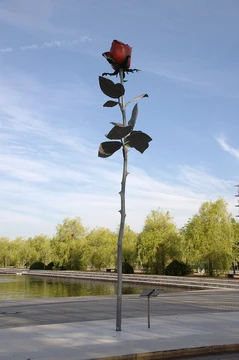
Yoko Ono
Japanese artist, musician, and peace activist known for avant-garde work.

Gregor Tatschl from Österreich · CC BY-SA 2.0
Yoko Ono (born February 18, 1933) is a Japanese artist, musician, and peace activist whose work also encompasses performance art and filmmaking. She became widely known outside the contemporary art world in 1969 when she married English musician John Lennon of the Beatles, with whom she subsequently recorded as a duo in the Plastic Ono Band. Ono began a career in popular music in 1969, forming the Plastic Ono Band with Lennon and producing a number of avant-garde music albums in the 1970s. She achieved commercial and critical success in 1980 with the chart-topping album Double Fantasy, a collaboration with Lennon released three weeks before his murder, winning the Grammy Award for Album of the Year.
- born
- February 18, 1933, Tokyo, Japan
- field
- Artist, musician, peace activist, performance artist, filmmaker
- nationality
- Japanese
- known_for
- Avant-garde art, Plastic Ono Band, marriage to John Lennon, peace activism, Gram
Verified Timeline
Lore & Background
Yoko Ono was born and grew up in Tokyo and moved to New York City in 1952 to join her family. She became involved with New York City's downtown artists scene in the early 1960s, which included the Fluxus group. Ono first met John Cage through his student Ichiyanagi Toshi, and she held a series of events at a loft at 112 Chambers Street from December 1960 through June 1961. In 1961, she had her first major public performance at Carnegie Recital Hall. Ono married John Lennon in 1969, and the couple used their honeymoon for public protests against the Vietnam War with what they called a bed-in. They remained married until Lennon was murdered in front of their apartment building, The Dakota, on December 8, 1980. Together they had one son, Sean, who later became a musician. Ono achieved commercial and critical success in 1980 with the chart-topping album Double Fantasy, a collaboration with Lennon released three weeks before his murder, winning the Grammy Award for Album of the Year.
Reader's Guide
Yoko Ono's significance extends beyond her marriage to John Lennon. As an artist, she was a key figure in the downtown New York avant-garde scene and associated with the Fluxus group, though she declined formal membership. Her conceptual works, such as Painting to Be Stepped On, and her experimental music challenged conventional boundaries. After Lennon's death, Ono worked to preserve his legacy, funding the Strawberry Fields memorial in Manhattan's Central Park, the Imagine Peace Tower in Iceland, and the John Lennon Museum in Saitama, Japan (which closed in 2010). She has made philanthropic contributions to the arts, peace, and disaster relief in Japan and the Philippines. Ono has had twelve number one singles on the US Dance charts and was named the 11th most successful dance club artist of all time by Billboard in 2016. Many musicians, including Elvis Costello, the B-52's, Sonic Youth, and Meredith Monk, have paid tribute to her as an artist and muse. In 2012, she received the Dr. Rainer Hildebrandt Human Rights Award and co-founded Artists Against Fracking.
Did You Know?
- The kanji characters of Yoko Ono's given name (洋子) mean 'ocean child.'
- She was a classmate of Prince Akihito, the future emperor of Japan, at Gakushūin school.
- During World War II, her mother traded a German-made sewing machine for 60 kilograms of rice to feed the family.
- Ono had twelve number one singles on the US Dance charts and was named the 11th most successful dance club artist of all time by Billboard in 2016.
- She co-founded the group Artists Against Fracking in 2012.
Early Life and Formative Years
Yoko Ono was born in Tokyo on February 18, 1933, to father Eisuke Ono, a wealthy banker and former classical pianist from a long line of samurai warrior-scholars, and mother Isoko Ono, granddaughter of Zenjiro Yasuda of the Yasuda zaibatsu. The kanji characters of her given name mean 'ocean child.' Two weeks before her birth, her father was transferred to San Francisco; she first met him when she was two years old. In 1937 the family returned to Japan, and Ono enrolled at Tokyo's elite Gakushūin school. She took piano lessons from age 4 until 12 or 13 and attended kabuki performances with her mother, who was trained in shamisen, koto, and other traditional instruments. During World War II, Ono remained in Tokyo and survived the fire-bombing of March 9, 1945, sheltered in a bunker in Tokyo's Azabu district. Starvation was rampant afterward; her mother traded a German-made sewing machine for 60 kilograms of rice to feed the family. Her father, who had been in Hanoi, was believed to be in a prisoner of war camp in China. After the war, Ono re-enrolled at Gakushūin, where she was a classmate of Prince Akihito, the future emperor of Japan. At 14, she began vocal training in lieder-singing.
Artistic Career and Musical Achievements
Ono's artistic identity crystallized in New York City's downtown scene in the early 1960s, where she mingled with the Fluxus group and pushed the boundaries of what art could be. Her work spanned performance art, filmmaking, and experimental music. At Sarah Lawrence College, her composition teacher André Singer introduced her to the twelve-tone techniques of Schoenberg and Berg and the radical soundscapes of Edgar Varèse, steering her firmly toward the avant-garde. It was not until 1969 that her name reached a mass audience. That year she formed the Plastic Ono Band with John Lennon, and together they produced a number of avant-garde music albums in the 1970s. The culmination arrived in 1980 with Double Fantasy, a chart-topping collaboration that earned the Grammy for Album of the Year. Beyond that landmark, Ono's solo work in dance music proved remarkably durable: she has amassed twelve number-one singles on the US Dance charts, and in 2016 Billboard ranked her the 11th most successful dance club artist of all time. Musicians across genres—from Elvis Costello and the B-52's to Sonic Youth and Meredith Monk—have recorded tributes acknowledging her as a singular creative force in her own right.
The Lennon Partnership and Defining Moments
Ono's marriage to John Lennon in 1969 transformed her from a respected figure in the New York avant-garde into a global cultural presence. The couple turned their honeymoon into a political statement, staging what they called a bed-in as a public protest against the Vietnam War—a gesture that captured worldwide headlines. Together they recorded as the Plastic Ono Band, blending Ono's experimental impulses with Lennon's songwriting. They raised one son, Sean, who later became a musician. The partnership endured until the evening of December 8, 1980, when Lennon was shot and killed outside The Dakota, the couple's apartment building in Manhattan. The tragedy came just three weeks after the release of Double Fantasy, their final collaborative album, which won the Grammy for Album of the Year.
Legacy, Activism, and Post-Lennon Life
In the decades following Lennon's death, Ono channeled her energy into preserving his memory and advancing causes she had long championed. She funded the Strawberry Fields memorial in Manhattan's Central Park, the Imagine Peace Tower in Iceland, and the John Lennon Museum in Saitama, Japan (which closed in 2010). Her philanthropy extended to the arts, peace initiatives, and disaster relief in Japan and the Philippines. In 2002 she inaugurated the LennonOno Grant for Peace, a biennial award of $50,000. In 2012 she received the Dr. Rainer Hildebrandt Human Rights Award and co-founded the group Artists Against Fracking.
Gallery
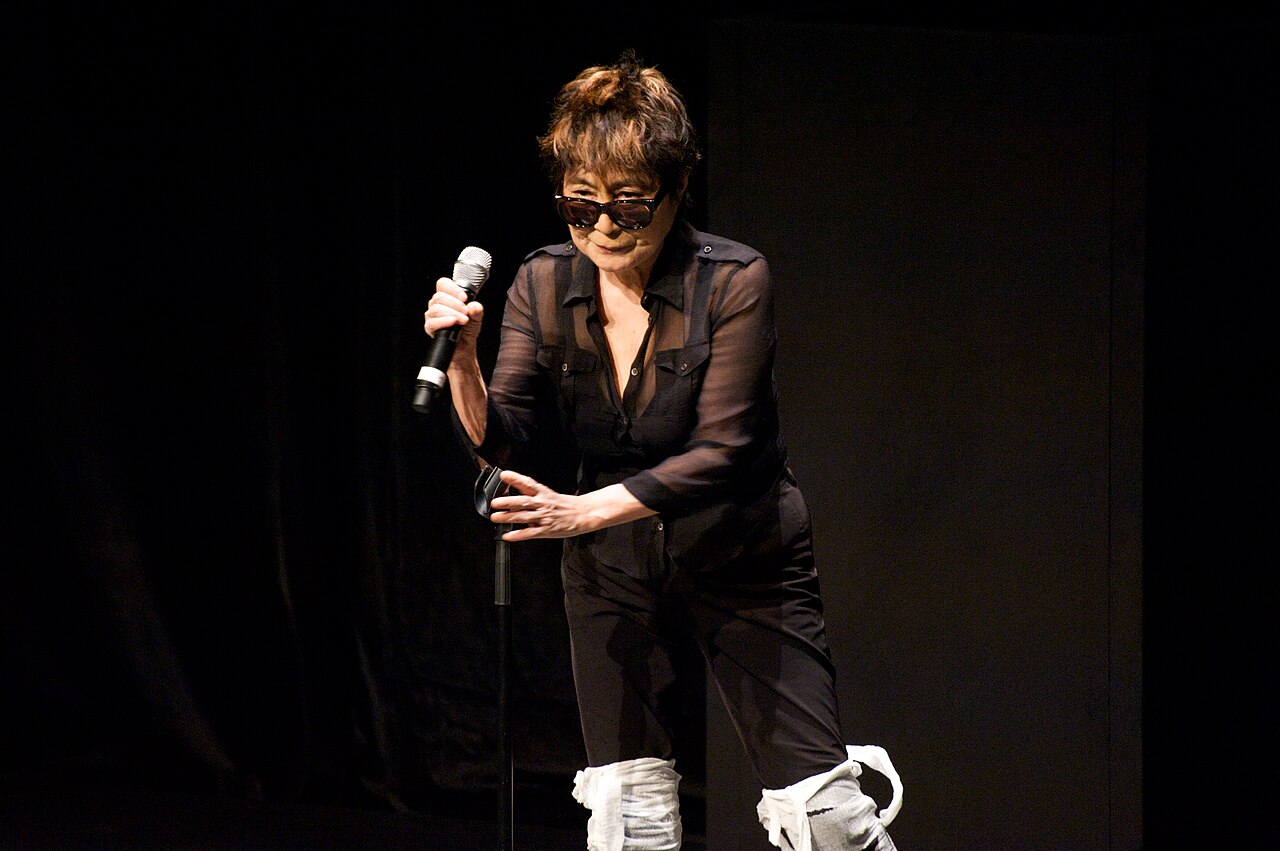
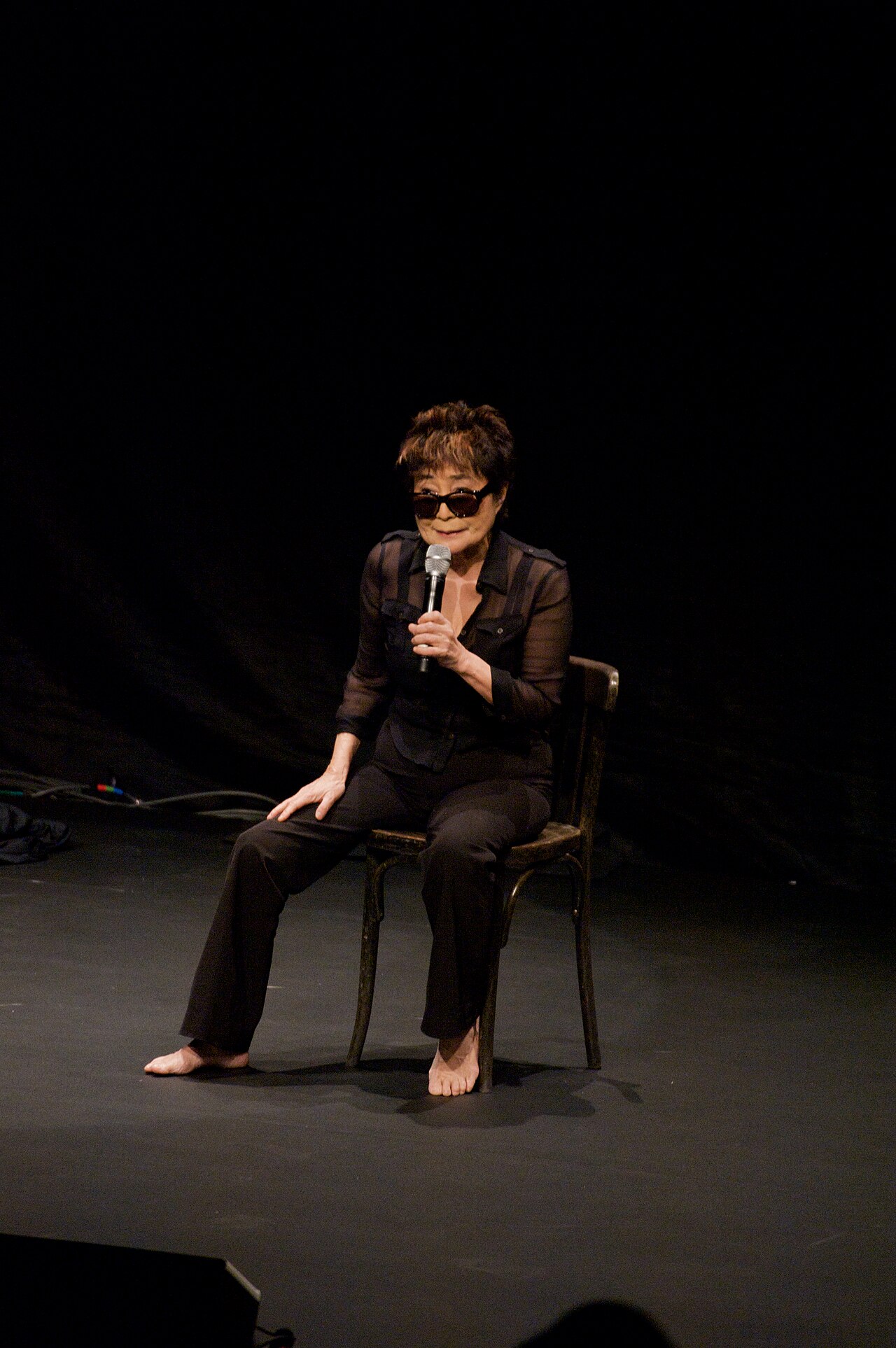
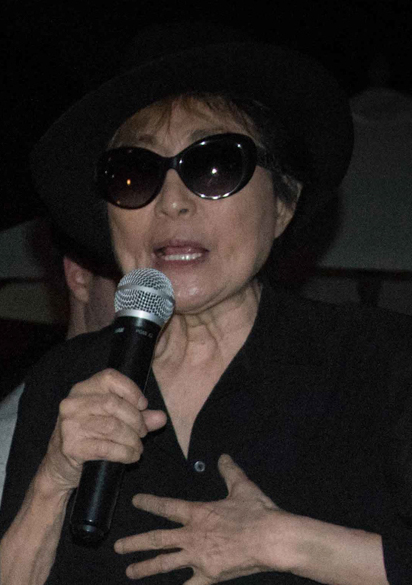
Frequently Asked Questions
Who is Yoko Ono?
Yoko Ono is a Japanese-born artist, musician, and peace activist who was born on February 18, 1933, in Tokyo. Her creative practice spans performance art, filmmaking, avant-garde music, and public advocacy for peace.
What is Yoko Ono most known for?
She is widely recognized for her avant-garde art, her musical partnership with John Lennon through the Plastic Ono Band, and her decades of peace activism. Her 1980 collaboration album Double Fantasy with Lennon also won a Grammy.
How did Yoko Ono and John Lennon become a musical duo?
The two married in 1969, and Ono went on to form the Plastic Ono Band with Lennon, releasing a string of experimental albums throughout the 1970s that blended conceptual art ideas with popular song structures.
Why is Yoko Ono considered important in art and music history?
She challenged the boundaries between conceptual performance art and mainstream popular music, creating a body of work that influenced both fields. She also became a globally visible voice for peace, especially after Lennon's assassination in 1980.
What style or genre does Yoko Ono's music belong to?
Her recordings are typically described as avant-garde or experimental pop, frequently featuring spoken word, abstract soundscapes, and conceptual themes. The 1970s Plastic Ono Band albums remain the clearest examples of this art-meets-pop approach.
More in Modern & Contemporary Artists 25-29
Elsewhere in the Modern & Contemporary Artists universe
Spotted an error? Know more?
This is a living reference — every entry is fact-audited, and reader corrections feed straight into our audit queue. Suggest an edit · See this site's audit record