
Keith Haring
American artist and activist known for subway chalk drawings and public murals.

Luis Alvaz · CC BY-SA 4.0
Keith Allen Haring (May 4, 1958 – February 16, 1990) was an American artist and activist whose bold, graphic imagery has "become a widely recognized visual language." Emerging from New York City's downtown art and graffiti scenes in the early 1980s, he transformed subway chalk drawings into an internationally celebrated career that bridged street art and Pop art.
- born
- May 4, 1958, Reading, Pennsylvania
- died
- February 16, 1990, of AIDS-related complications
- field
- Artist and activist
- nationality
- American
- known_for
- Subway chalk drawings, public murals, and iconic symbols such as the Radiant Bab
Verified Timeline
Lore & Background
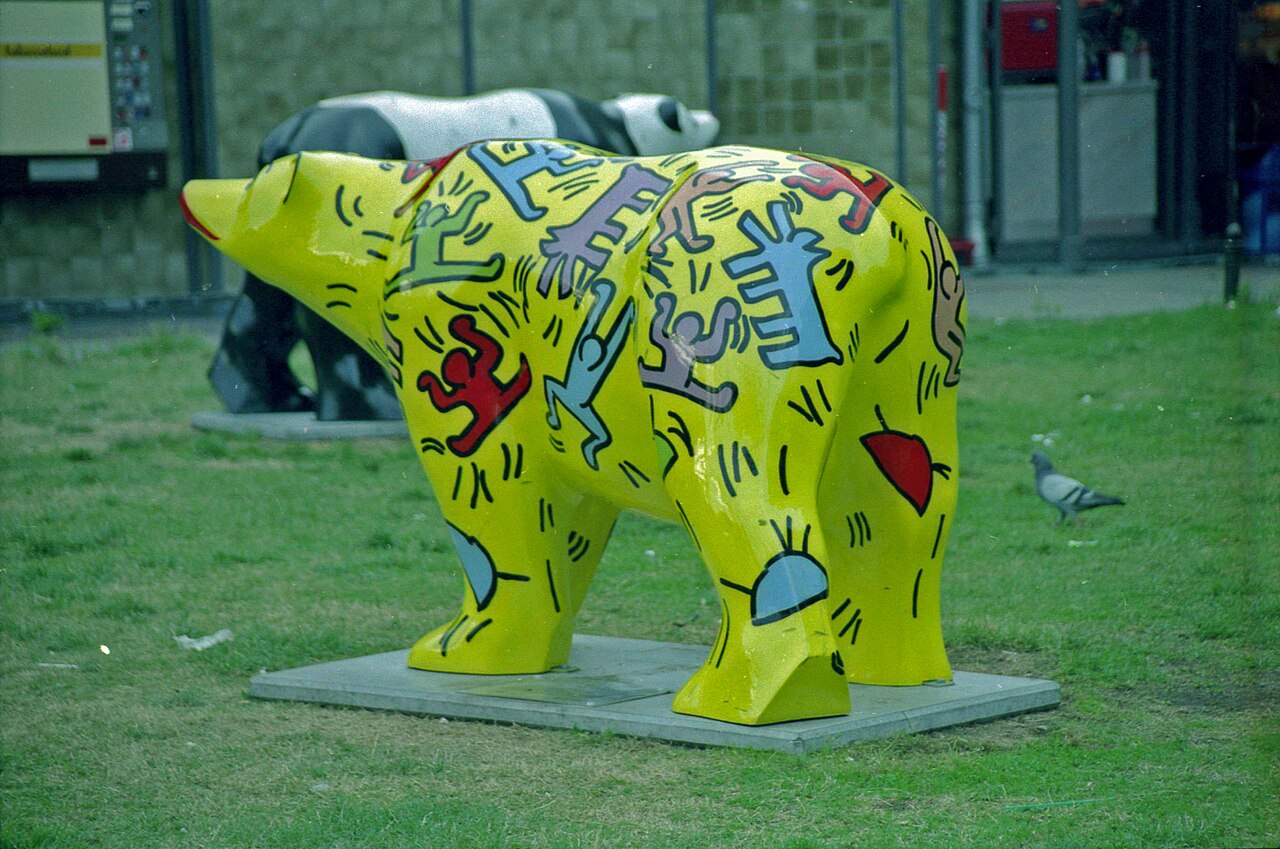
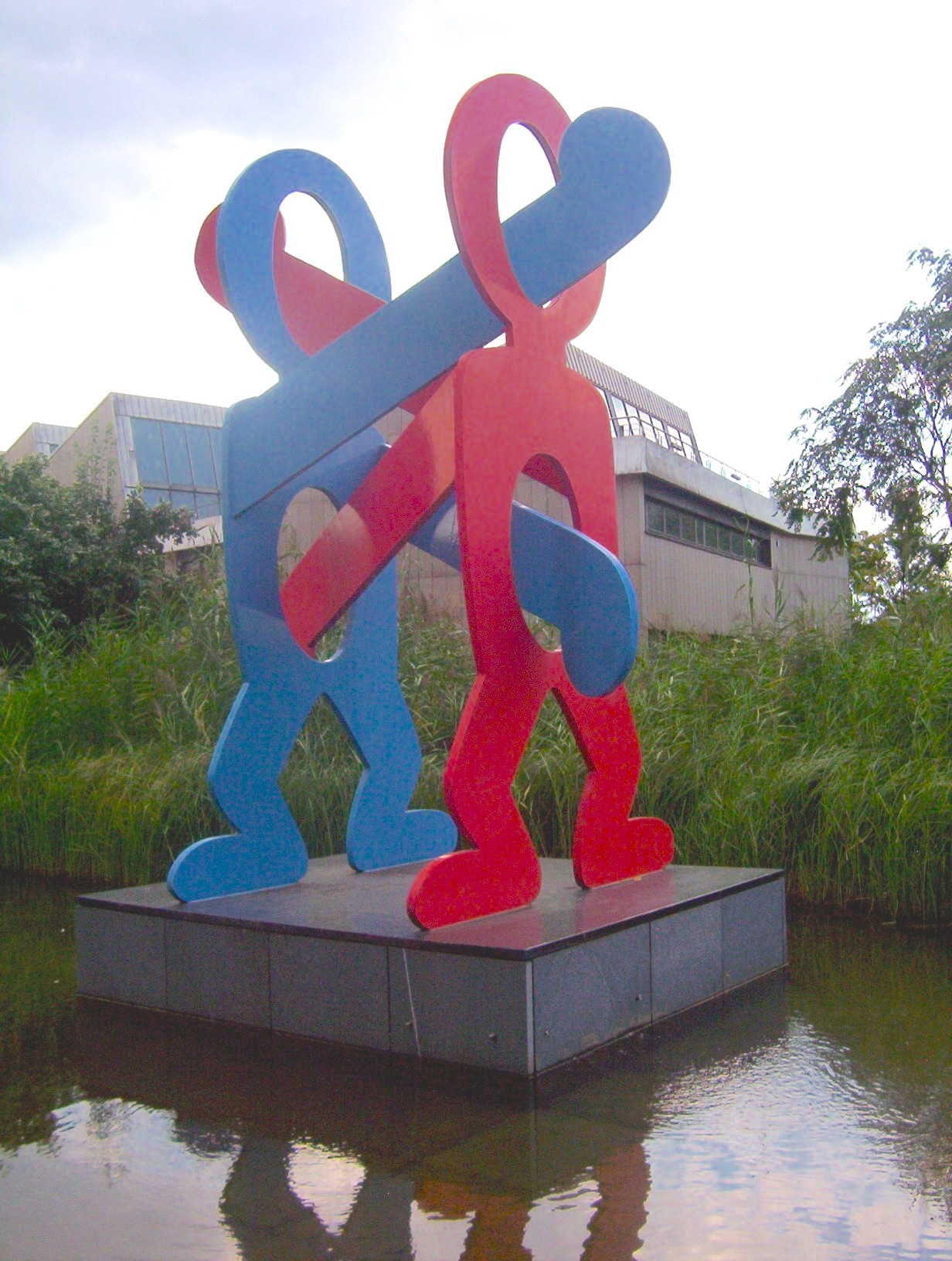
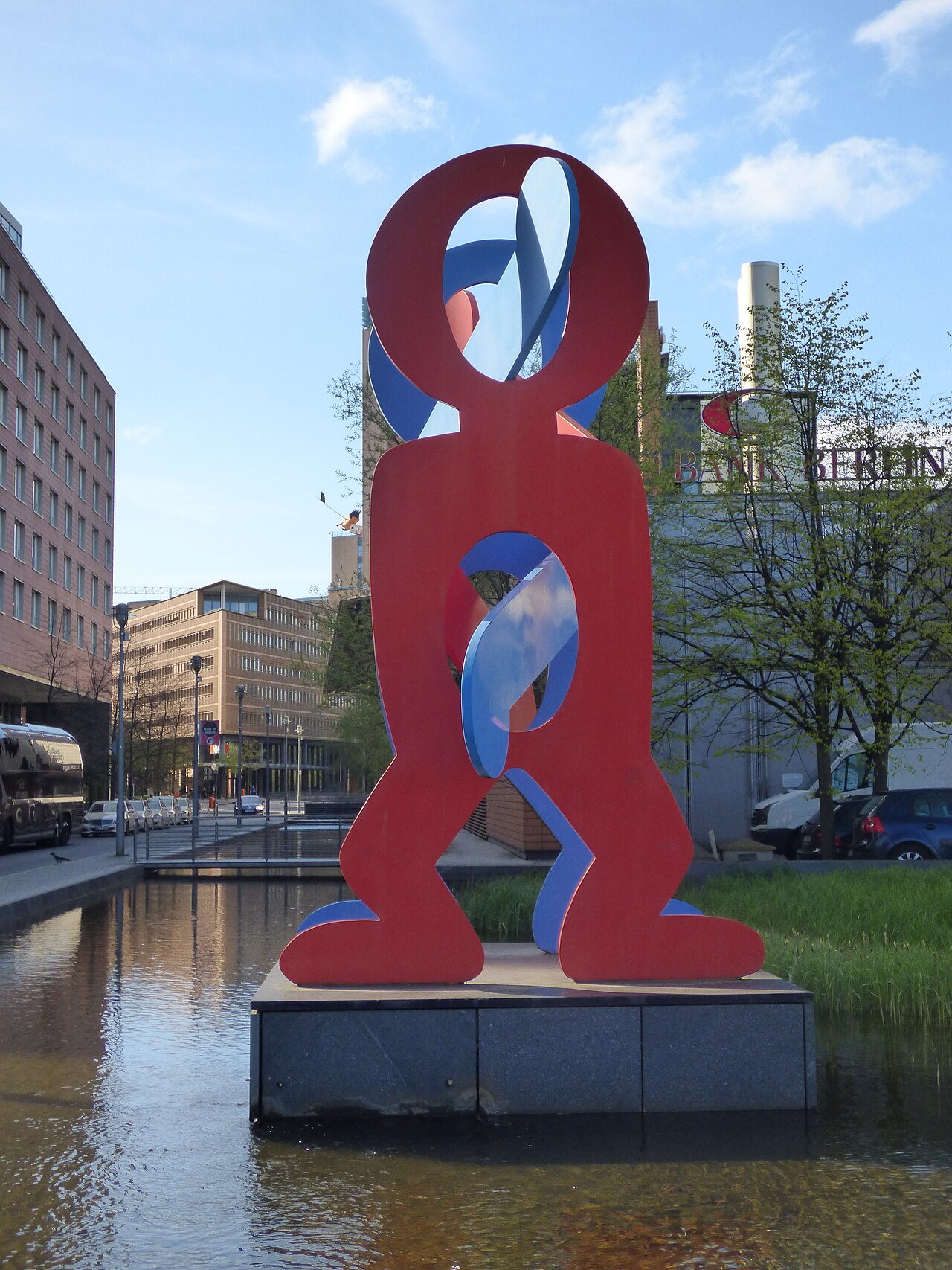
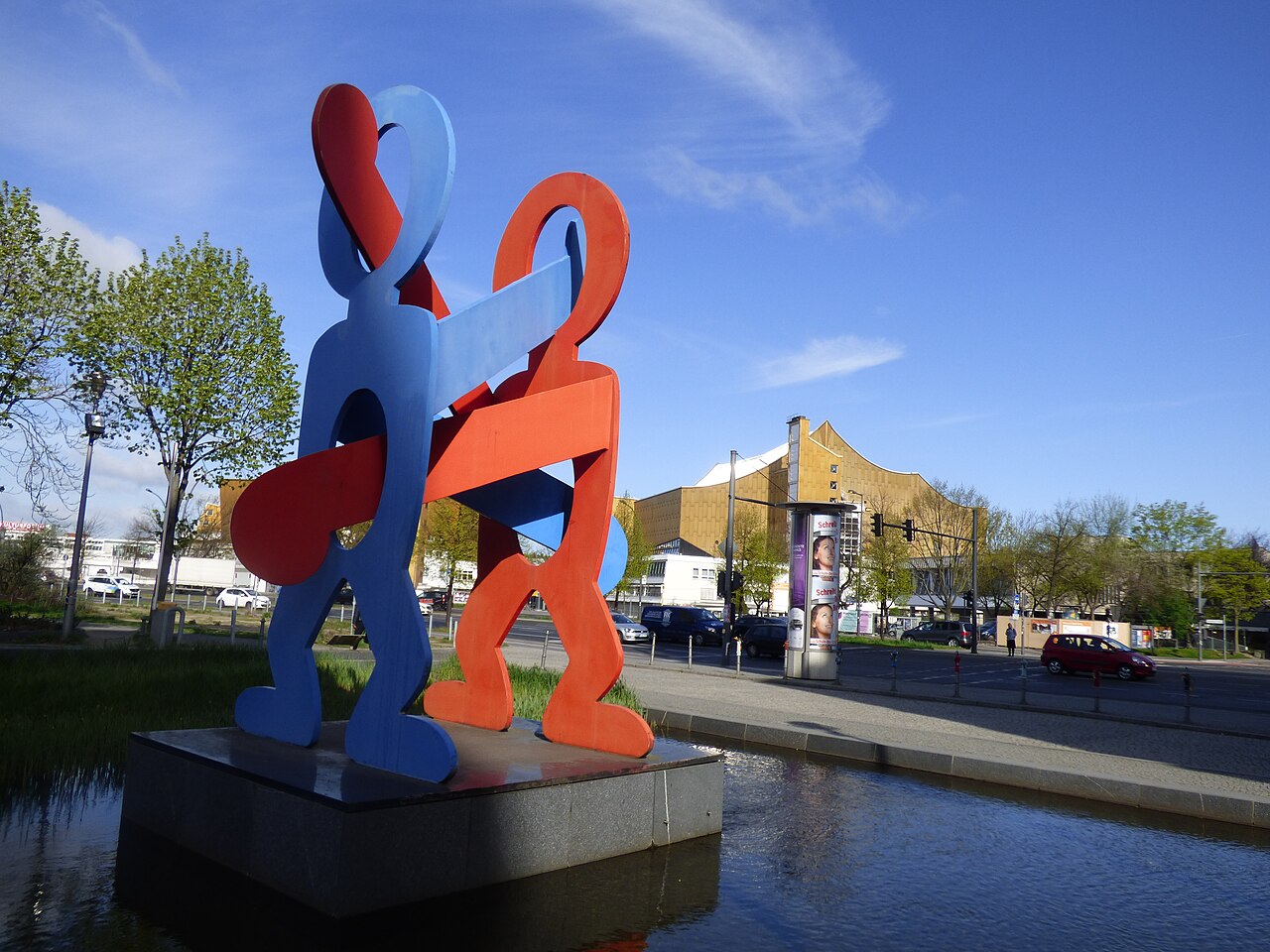
Haring first gained public attention through spontaneous white-chalk drawings on unused black advertising panels in New York City subway stations, featuring crawling babies, barking dogs, dancing figures, and other animated symbols. As his reputation grew, he gained gallery representation and produced large-scale paintings and sculptures. Between 1982 and 1989, he created more than 50 public murals, many of them voluntarily for hospitals, schools, and community spaces. Much of Haring's work addressed political and social issues, including anti-apartheid activism, the crack epidemic, homosexuality, safe sex, and AIDS awareness, often using his own iconography to communicate urgent messages. In 1986, he opened the Pop Shop to make his art widely accessible through affordable merchandise.
Reader's Guide
Keith Haring's significance lies in his ability to merge street art with fine art while addressing urgent social and political issues. His bold, graphic imagery became a widely recognized visual language, and his public murals brought art to communities. Haring's legacy has been recognized within LGBTQ history: in 2014, he was among the inaugural honorees of the Rainbow Honor Walk in San Francisco, and in 2019, he was one of the inaugural 50 American "pioneers, trailblazers, and heroes" inducted onto the National LGBTQ Wall of Honor at the Stonewall Inn in New York City. After his death from AIDS-related complications in 1990, the Whitney Museum of American Art organized a retrospective of his work in 1997. His work continues to influence contemporary art and activism.
Did You Know?
- Haring first gained public attention in December 1980 by drawing white chalk images on unused black advertising panels in New York City subway stations.
- Between 1982 and 1989, he created more than 50 public murals, many voluntarily for hospitals, schools, and community spaces.
- In 1986, he opened the Pop Shop to make his art widely accessible through affordable merchandise.
- In 2014, he was among the inaugural honorees of the Rainbow Honor Walk in San Francisco.
- In 2019, he was one of the inaugural 50 American 'pioneers, trailblazers, and heroes' inducted onto the National LGBTQ Wall of Honor at the Stonewall Inn in New York City.
From Subway Walls to Global Stages
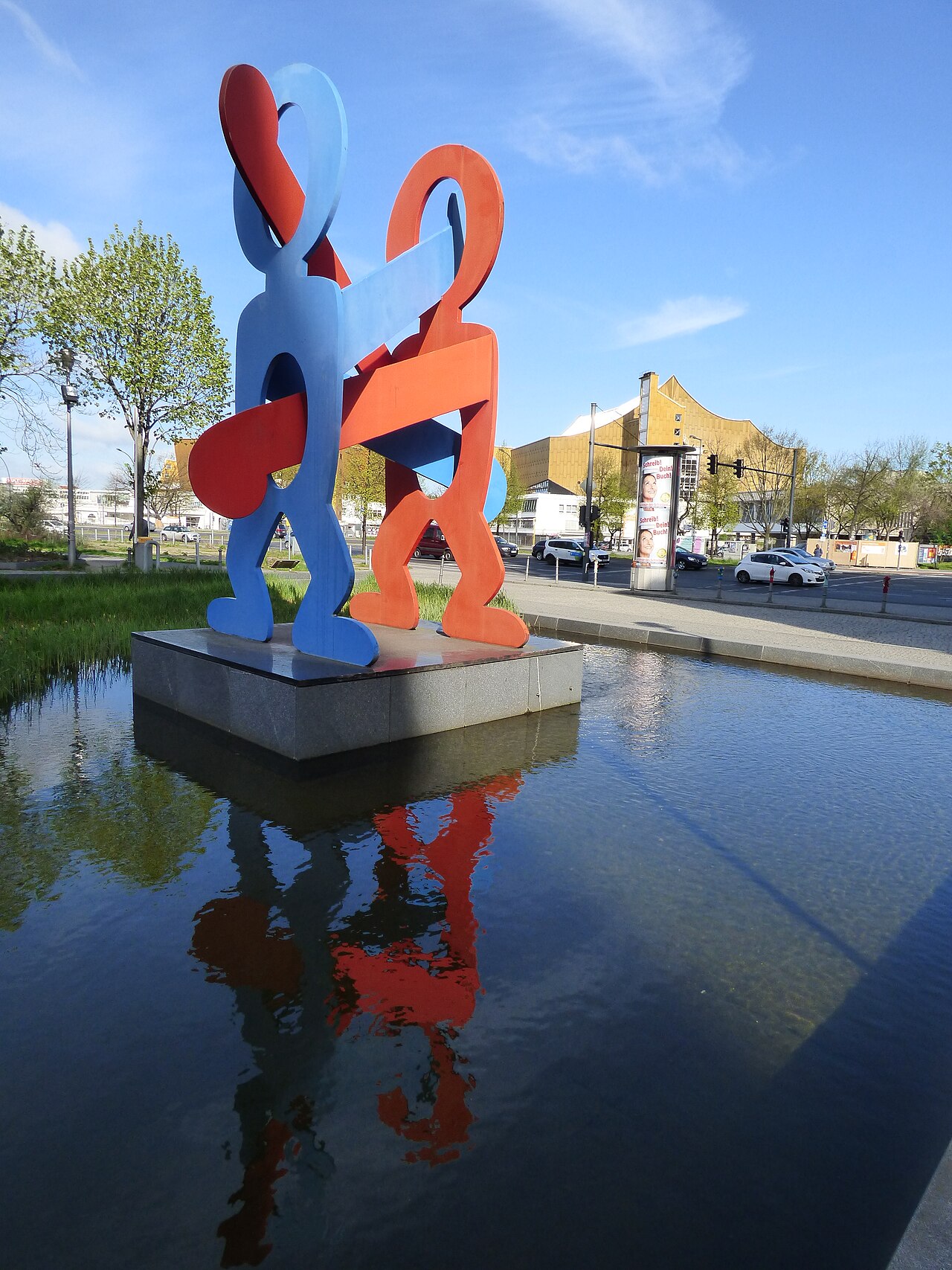
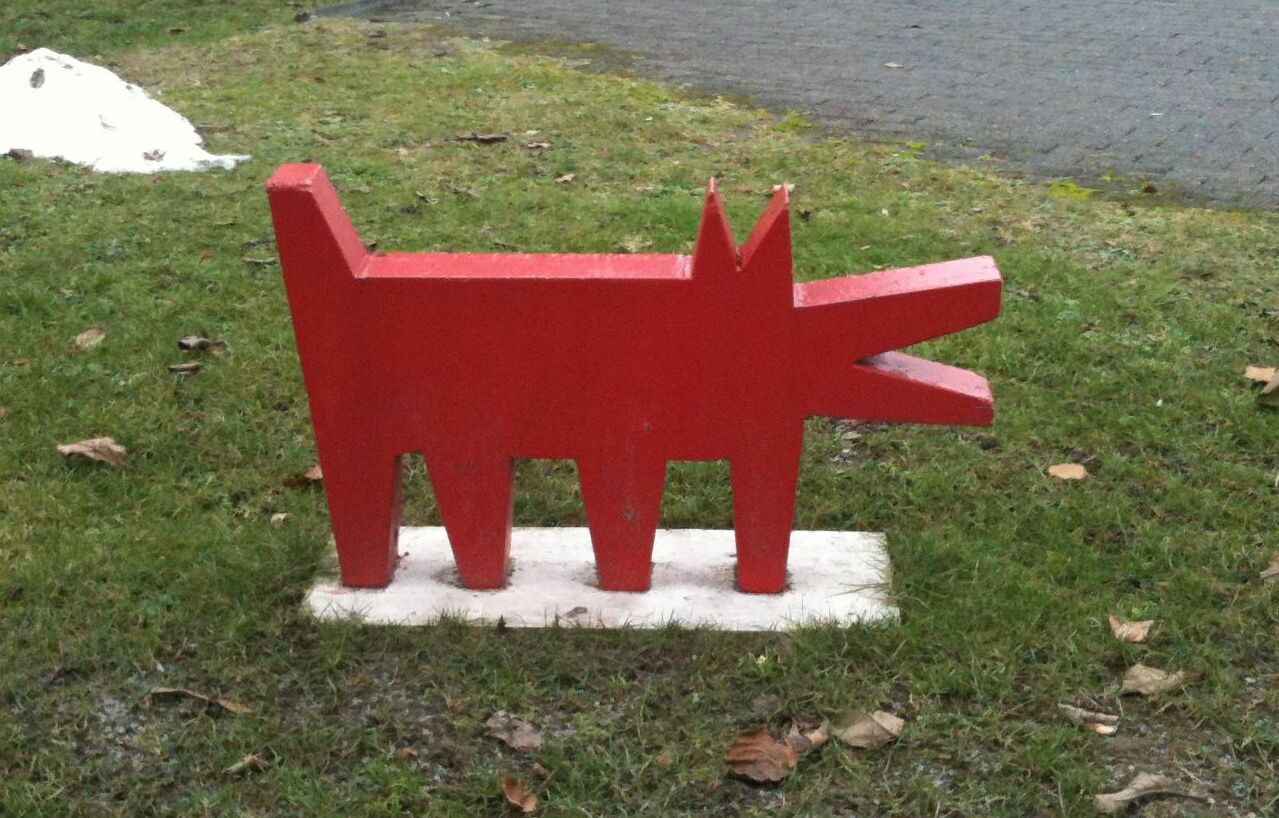
Keith Haring's career arc is one of the most dramatic in modern art history. He began in December 1980, sketching white chalk figures on the black, unused advertising panels that lined New York City subway stations. He considered the subways to be his "laboratory," a place where he could experiment and create his artwork and saw the black advertisement paper as a free space and "the perfect place to draw." His recurring symbols—the Radiant Baby crawling with rays of light, barking dogs, dancing figures, flying saucers—formed what he called a visual vocabulary, and his chalk tag became his signature. By November 1981, that street-level visibility had translated into gallery representation, with Hal Bromm Gallery in Tribeca mounting his first commercial solo show. Between 1982 and 1989, Haring produced over fifty public murals, many donated freely to hospitals, schools, and community centers. His reach expanded internationally: he exhibited at documenta in Kassel in 1982, the Whitney Biennial in 1983, the São Paulo Biennial in 1983, and the Venice Biennale. In 1986, he opened the Pop Shop, a storefront selling affordable prints, T-shirts, and accessories, deliberately keeping his imagery within reach of everyday people rather than collectors alone.
Art as Activism
Haring never treated his practice as separate from the world's urgent problems. His iconography became a vehicle for political and social commentary spanning anti-apartheid activism, the crack epidemic, the rights of gay men, safe-sex education, and AIDS awareness. He used the same bold, instantly readable figures that made his subway drawings famous to communicate messages that demanded immediate attention from a broad public. The Pop Shop, which he opened in 1986, was itself an act of democratic access: by producing affordable merchandise—prints, T-shirts, accessories—he ensured that his art and its messages could circulate far beyond the walls of galleries and museums. His willingness to donate large-scale murals to hospitals, schools, and community spaces between 1982 and 1989 reinforced the same principle. Haring's work addressed subjects that many in the art world were still reluctant to name openly, and he did so with a directness and visual clarity that made his activism inseparable from his aesthetic.
Roots in Pennsylvania and a Self-Taught Vision
Keith Allen Haring was born on May 4, 1958, at Community General Hospital in Reading, Pennsylvania, and raised in the small town of Kutztown by his mother Joan and his father Allen, an engineer who also drew amateur cartoons. Drawing together with his father from a very young age, Haring absorbed the visual language of Walt Disney, Dr. Seuss, Charles Schulz, and the Looney Tunes. After graduating high school in 1976, he studied commercial art at Pittsburgh's Ivy School of Professional Art, but a book by Robert Henri—The Art Spirit—convinced him to pursue his own voice rather than conform to commercial expectations. A maintenance job at the Pittsburgh Arts and Crafts Center gave him access to the work of Jean Dubuffet, Jackson Pollock, and Mark Tobey. A 1977 retrospective of Pierre Alechinsky encouraged him to build large compositions around characters and lettering, while a 1978 lecture by sculptor Christo showed him how to fold the public into the artwork. In 1978 he moved to the Lower East Side of Manhattan to study at the School of Visual Arts, where he also worked as a busboy at the nightclub Danceteria and explored semiotics, video, and performance.
A Legacy Written in Color and Recognition
Keith Haring died on February 16, 1990, of AIDS-related complications, at the age of thirty-one. His passing did not dim the reach of his work. In 1997, the Whitney Museum of American Art mounted a retrospective that consolidated his place in the canon of American art. His contributions to LGBTQ culture have continued to be formally recognized: in 2014, he was named among the inaugural honorees of the Rainbow Honor Walk in San Francisco, a walk of fame celebrating LGBTQ individuals who made significant contributions in their fields. In 2019, he became one of the first fifty figures inducted onto the National LGBTQ Wall of Honor at the Stonewall Inn in New York City, a permanent tribute to what the institution describes as American "pioneers, trailblazers, and heroes." These recognitions sit alongside the broader cultural imprint of his imagery—his bold, graphic visual language has become a shorthand recognized far and wide, continuing to appear on public murals and everyday merchandise, ensuring that the messages he fought to make visible remain in circulation long after his death.
Gallery
More in Modern & Contemporary Artists 25-29
Elsewhere in the Modern & Contemporary Artists universe
Spotted an error? Know more?
This is a living reference — every entry is fact-audited, and reader corrections feed straight into our audit queue. Suggest an edit · See this site's audit record