Damien Hirst
English artist known for preserved animal works and record auction.

via Wikipedia: Damien Hirst · see source
Damien Steven Hirst (born 7 June 1965) is an English artist and art collector, and one of the Young British Artists (YBAs) who dominated the art scene in the UK during the 1990s. He is reportedly the United Kingdom's richest living artist, with his wealth estimated at US$384 million in the 2020 Sunday Times Rich List. Death is a central theme in his works. He became famous for a series of artworks in which dead animals (including a shark, a sheep, a pig, and a cow) are preserved, sometimes having been dissected, in formaldehyde.
- born
- 7 June 1965
- nationality
- English
- known_for
- Formaldehyde-preserved animal artworks; Young British Artists; record-breaking a
Verified Timeline
Lore & Background
Hirst was born Damien Steven Brennan in Bristol and grew up in Leeds with his Irish mother who worked for the Citizens Advice Bureau. He never met his father; his mother married his stepfather when Hirst was two, and the couple divorced 10 years later. His mother cut up his bondage trousers and heated one of his Sex Pistols vinyl records on the cooker to turn it into a fruit bowl, but encouraged his drawing. He studied Fine Art at Goldsmiths College (1986–89), although he was refused a place the first time he applied. While a student, Hirst had a placement at a mortuary, an experience that influenced his later themes and materials. In July 1988, in his second year at Goldsmiths, Hirst was the main organiser of an independent student exhibition, Freeze, in a disused London Port Authority administrative block in London's Docklands. The show was visited by Charles Saatchi, Norman Rosenthal and Nicholas Serota. In 1990, Hirst curated two warehouse shows, Modern Medicine and Gambler, in a former Peek Freans biscuit factory. Saatchi arrived at the second show and bought Hirst's first major animal installation, A Thousand Years, consisting of a large glass case containing maggots and flies feeding on a rotting cow's head.
Reader's Guide
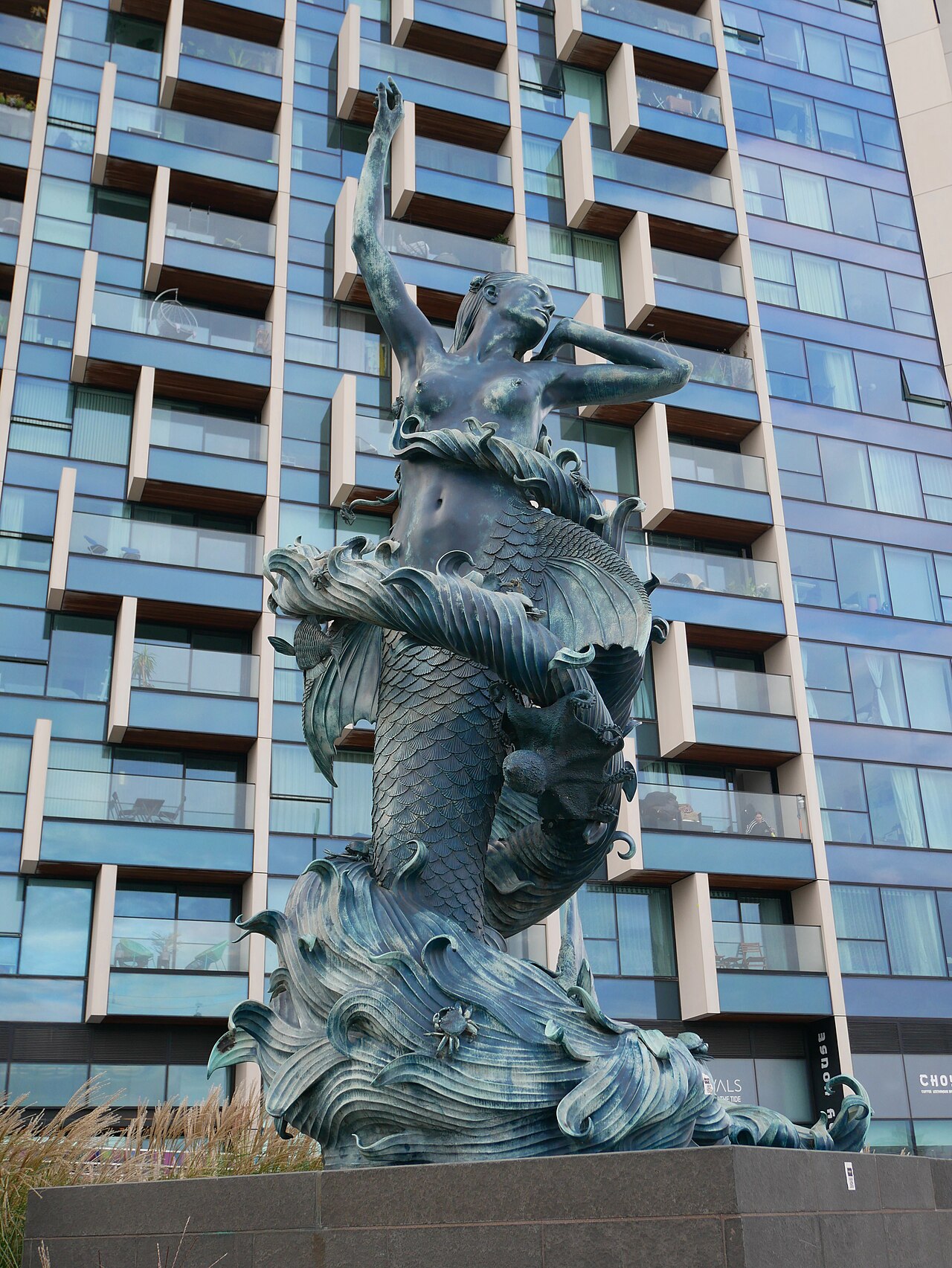
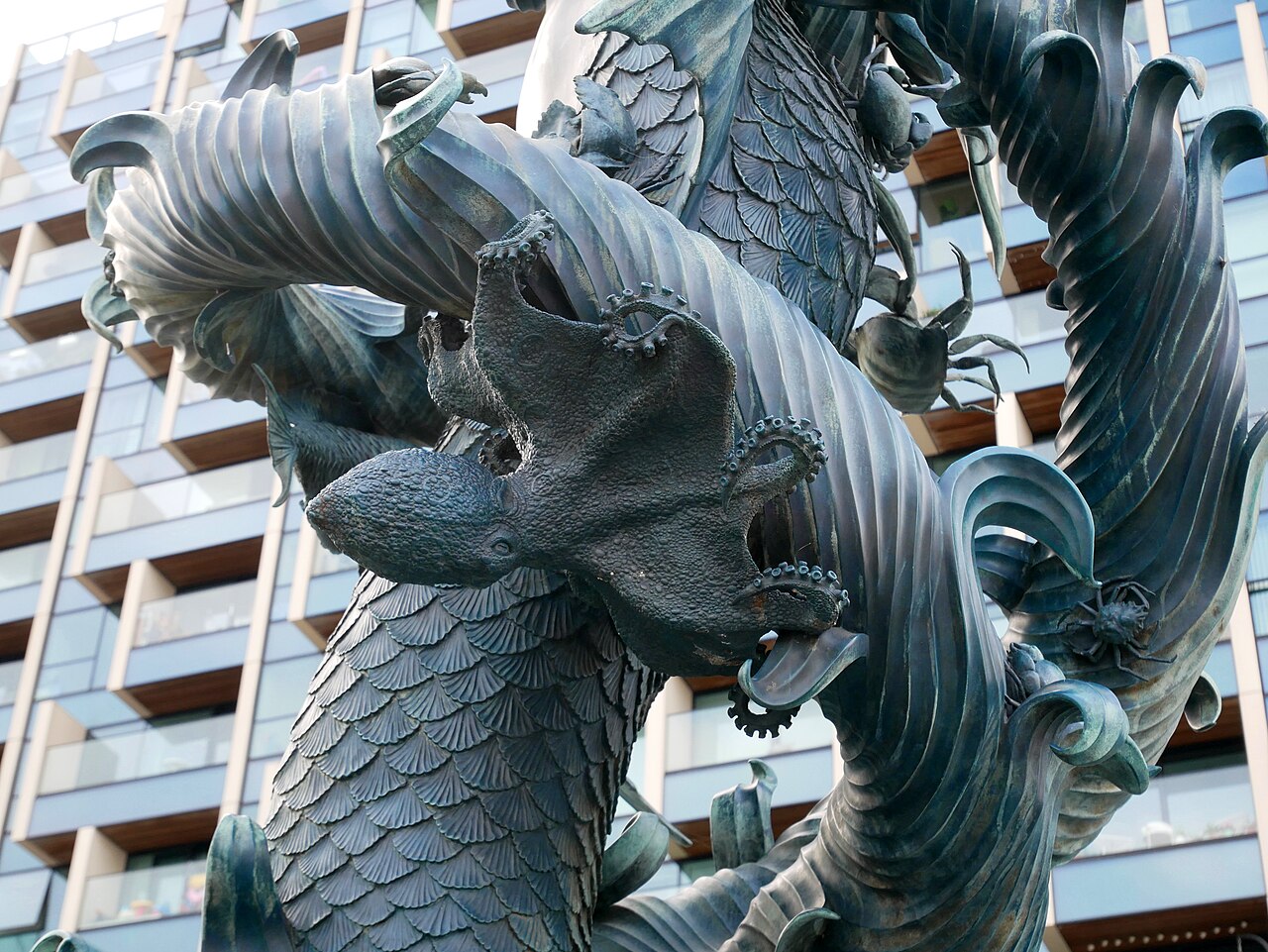
During the 1990s Hirst's career was closely linked with the collector Charles Saatchi, but increasing frictions came to a head in 2003 and the relationship ended. The best-known of his formaldehyde works is The Physical Impossibility of Death in the Mind of Someone Living, a 14-foot (4.3 m) tiger shark immersed in formaldehyde in a clear display case. In September 2008, Hirst made an unprecedented move for a living artist by selling a complete show, Beautiful Inside My Head Forever, at Sotheby's by auction, bypassing his long-standing galleries. The auction raised £111 million ($198 million), breaking the record for a one-artist auction as well as Hirst's own record with £10.3 million for The Golden Calf, an animal with 18-carat gold horns and hooves, preserved in formaldehyde. Since 1999, Hirst's works have been challenged and contested as plagiarised 16 times. In one instance, after his sculpture Hymn was found to be closely based on a child's toy, legal proceedings led to an out-of-court settlement. Hirst won the Turner Prize in 1995.
Did You Know?
- Hirst was born Damien Steven Brennan in Bristol and never met his father.
- His mother heated one of his Sex Pistols vinyl records on the cooker to turn it into a fruit bowl.
- While a student at Goldsmiths, Hirst had a placement at a mortuary that influenced his later themes.
- The shark in The Physical Impossibility of Death in the Mind of Someone Living cost £6,000 and was caught by a commissioned fisherman in Australia.
- In 1994, a 35-year-old artist poured black ink into Hirst's Away from the Flock at the Serpentine Gallery and was given two years' probation.
Roots and Rebellions
Born Damien Steven Brennan in Bristol on 7 June 1965, Hirst grew up in Leeds with his Irish mother who worked for the Citizens Advice Bureau. He never met his father; his mother married his stepfather when Hirst was two, and the couple divorced 10 years later. His stepfather was reportedly a motor mechanic. His mother stated that she lost control of her son when he was young; he was arrested on two occasions for shoplifting. Hirst sees her as someone who would not tolerate rebellion: she cut up his bondage trousers and heated one of his Sex Pistols vinyl records on the cooker to turn it into a fruit bowl (or a plant pot). She did, though, encourage his liking for drawing, which was his only successful educational subject. His art teacher at Allerton Grange School 'pleaded' for Hirst to be allowed to enter the sixth form, where he took two A-levels, achieving an 'E' grade in art. He was refused admission to Jacob Kramer College when he first applied, but attended the art school after a subsequent successful application to the Foundation Diploma course. He went to an exhibition of work by Francis Davison, staged by Julian Spalding at the Hayward Gallery in 1983. Davison created abstract collages from torn and cut coloured paper which, Hirst said, 'blew me away', and which inspired his own work for the next two years. He worked for two years on London building sites, then studied Fine Art at Goldsmiths College (1986–89), although again he was refused a place the first time he applied.
Warehouse Shows and the YBA Breakthrough
In July 1988, in his second year at Goldsmiths College, Hirst was the main organiser of an independent student exhibition, Freeze, in a disused London Port Authority administrative block in London's Docklands. He gained sponsorship for this event from the London Docklands Development Corporation. The show was visited by Charles Saatchi, Norman Rosenthal and Nicholas Serota, thanks to the influence of his Goldsmiths lecturer Michael Craig-Martin. Hirst's own contribution to the show consisted of a cluster of cardboard boxes painted with household paint. After graduating, Hirst was included in New Contemporaries show and in a group show at Kettle's Yard gallery in Cambridge. Seeking a gallery dealer, he first approached Karsten Schubert, but was turned down. Hirst, along with his friend Carl Freedman and Billee Sellman, curated two enterprising 'warehouse' shows in 1990, Modern Medicine and Gambler, in a Bermondsey former Peek Freans biscuit factory they designated 'Building One'. Saatchi arrived at the second show in a green Rolls-Royce and, according to Freedman, stood open-mouthed with astonishment in front of (and then bought) Hirst's first major 'animal' installation, A Thousand Years, consisting of a large glass case containing maggots and flies feeding on a rotting cow's head. At this time, Hirst said, 'I can't wait to get into a position to make really bad art and get away with it. At the moment if I did certain things people would look at it, consider it and then say "f off". But after a while you can get away with things.'
Death, Animals, and the Formaldehyde Aesthetic
Death is a central theme in Hirst's works. He became famous for a series of artworks in which dead animals (including a shark, a sheep, a pig, and a cow) are preserved, sometimes having been dissected, in formaldehyde. The best-known of these is The Physical Impossibility of Death in the Mind of Someone Living, a 14-foot (4.3 m) tiger shark immersed in formaldehyde in a clear display case. While a student at Goldsmiths, Hirst had a placement at a mortuary, an experience that influenced his later themes and materials. In 1991, Charles Saatchi had offered to fund whatever artwork Hirst wanted to make, and the result was showcased in 1992 in the first Young British Artists exhibition at the Saatchi Gallery in North London. Hirst's work was titled The Physical Impossibility of Death in the Mind of Someone Living and was a shark in formaldehyde in a vitrine, and sold for £50,000. The shark had been caught by a commissioned fisherman in Australia and had cost £6,000. Hirst's first major international presentation was in the Venice Biennale in 1993 with the work, Mother and Child Divided, a cow and a calf cut into sections and exhibited in a series of separate vitrines. In 1994 at the Serpentine Gallery he exhibited Away from the Flock, a sheep in a tank of formaldehyde. In September 2008, Hirst sold The Golden Calf, an animal with 18-carat gold horns and hooves, preserved in formaldehyde, for £10.3 million.
Auctions, Controversies, and the Business of Art
During the 1990s Hirst's career was closely linked with the collector Charles Saatchi, but increasing frictions came to a head in 2003 and the relationship ended. In September 2008, Hirst made an unprecedented move for a living artist by selling a complete show, Beautiful Inside My Head Forever, at Sotheby's by auction and bypassing his long-standing galleries. The auction raised £111 million ($198 million), breaking the record for a one-artist auction as well as Hirst's own record with £10.3 million for The Golden Calf. He is reportedly the United Kingdom's richest living artist, with his wealth estimated at US$384 million in the 2020 Sunday Times Rich List. Since 1999, Hirst's works have been challenged and contested as plagiarised 16 times. In one instance, after his sculpture Hymn was found to be closely based on a child's toy, legal proceedings led to an out-of-court settlement. Hirst won the Turner Prize in 1995.
Gallery
More in Modern & Contemporary Artists 1-24
Elsewhere in the Modern & Contemporary Artists universe
Spotted an error? Know more?
This is a living reference — every entry is fact-audited, and reader corrections feed straight into our audit queue. Suggest an edit · See this site's audit record