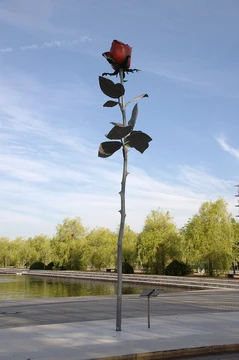
Cy Twombly
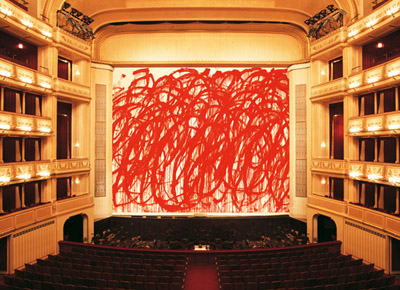
American painter known for large-scale scribbled, graffiti-like works on muted fields.

Cy Twombly · CC BY 3.0
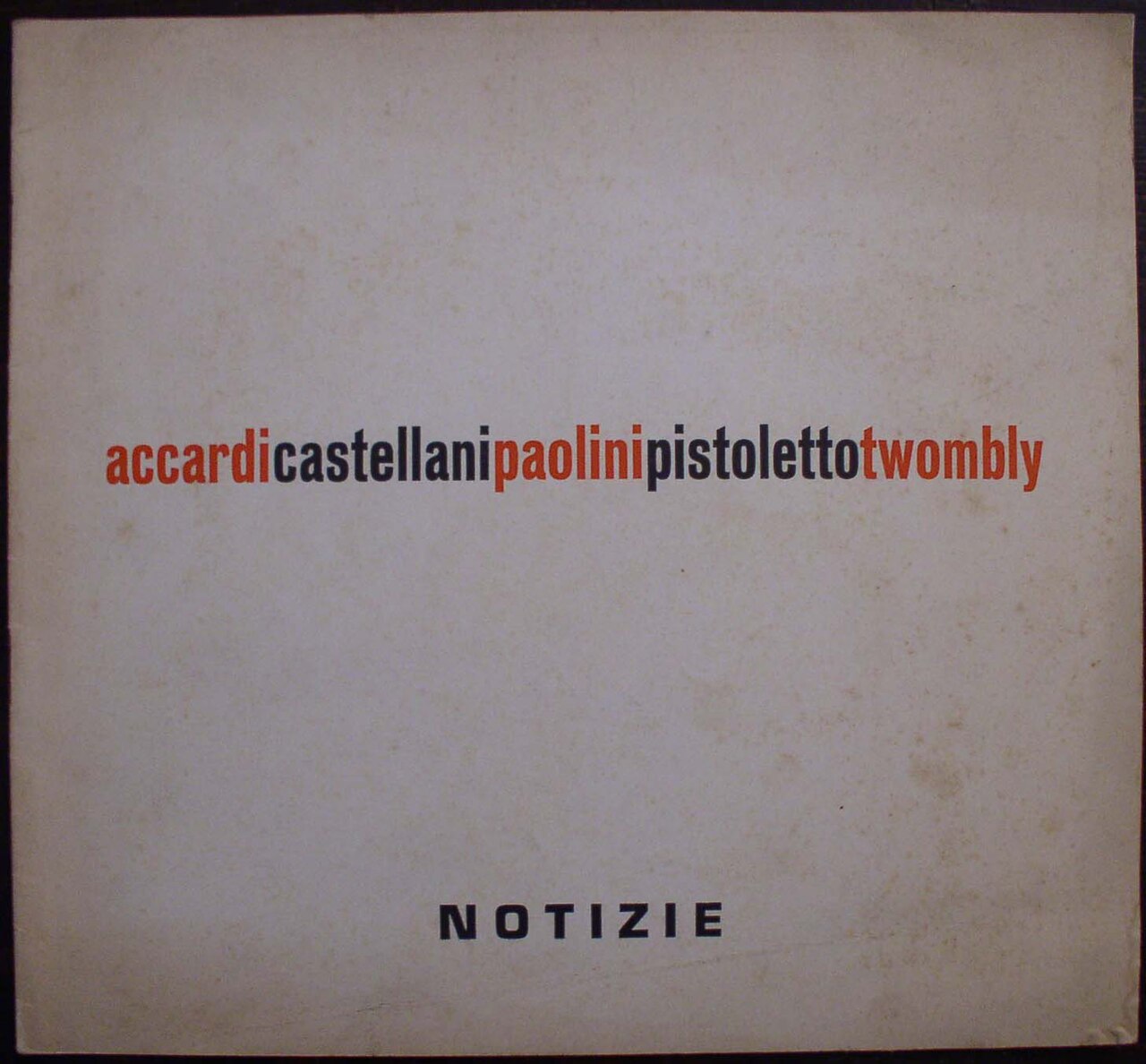
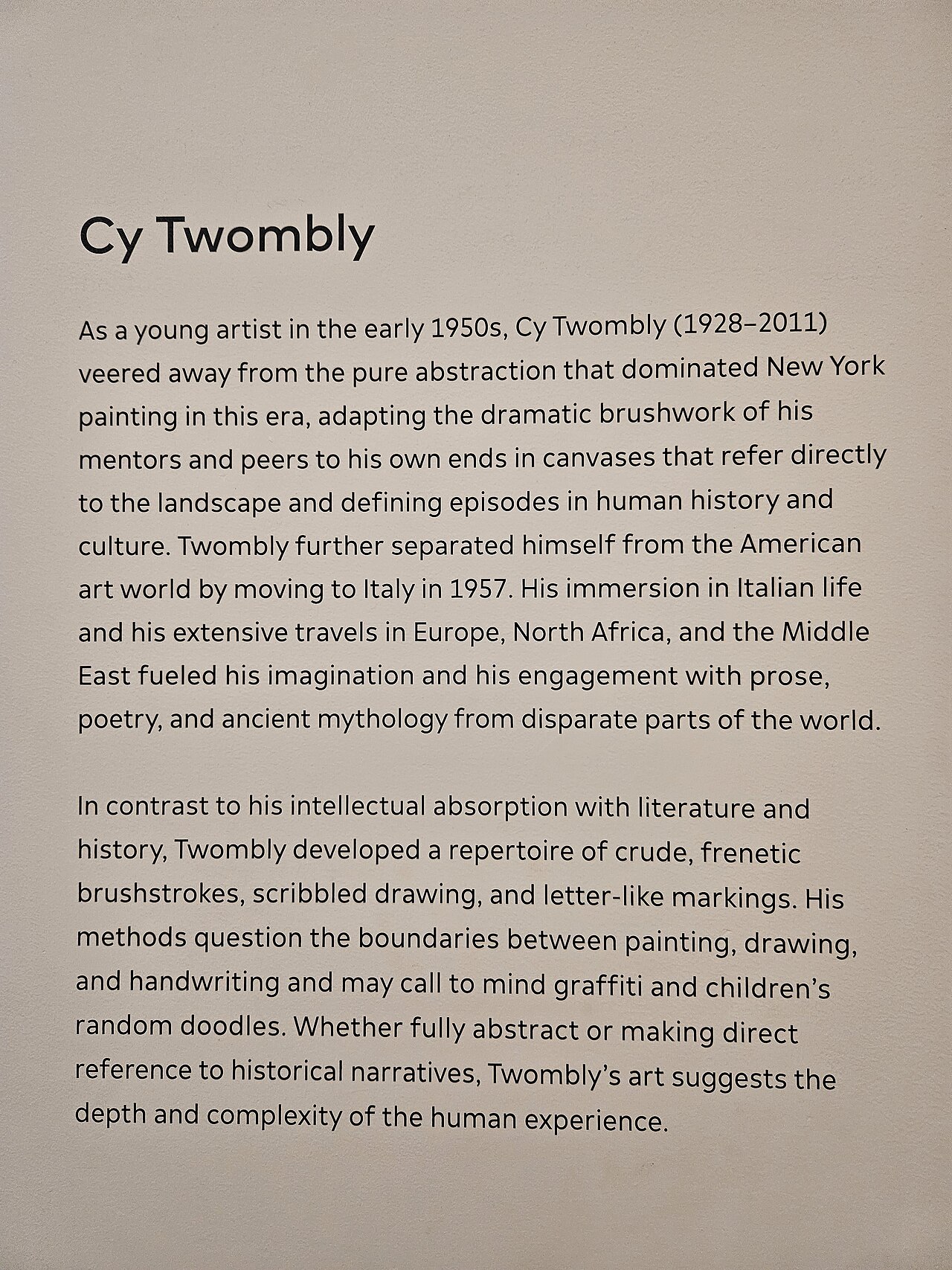
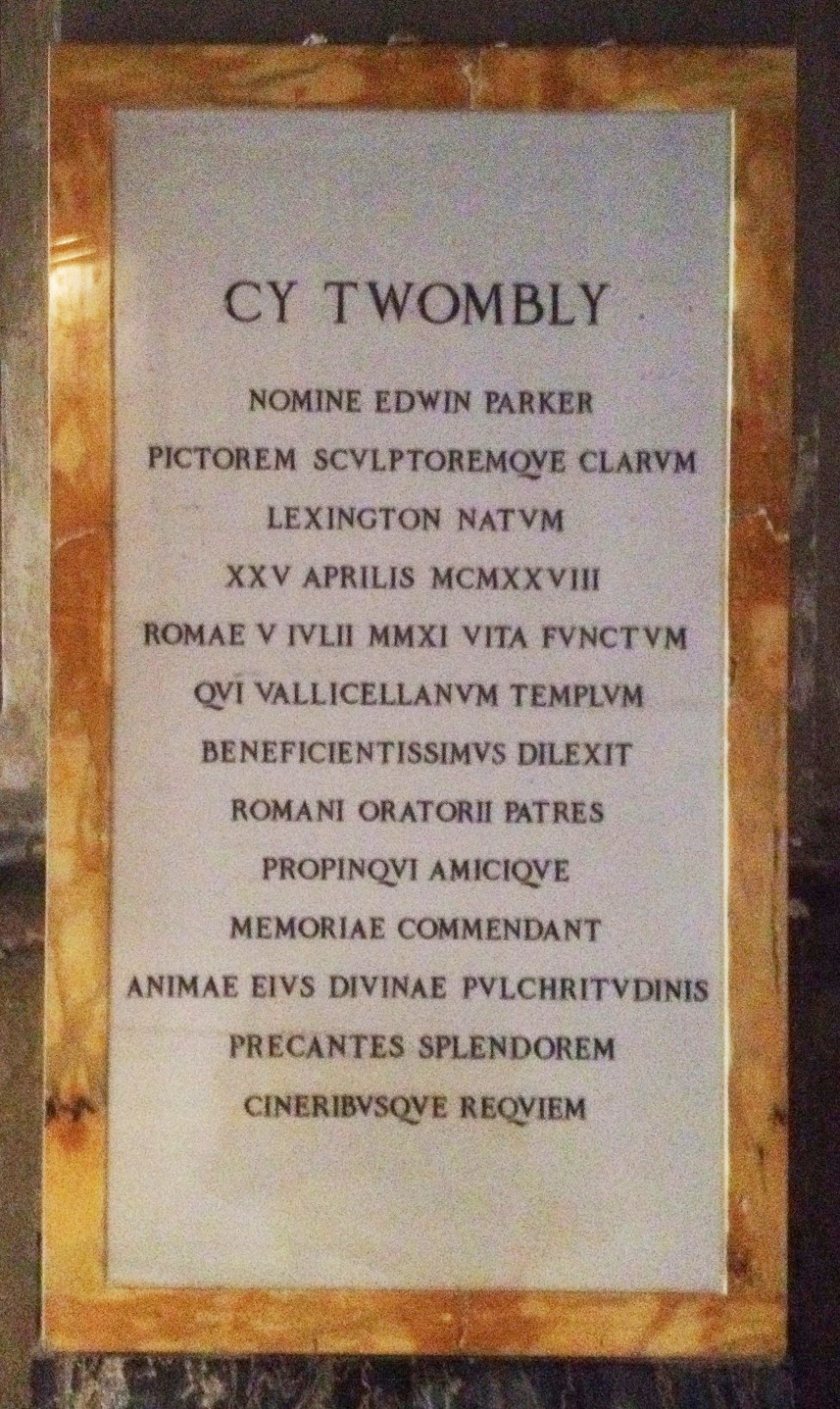
Edwin Parker "Cy" Twombly Jr. (April 25, 1928 – July 5, 2011) was an American painter, sculptor, and photographer. His best-known works are typically large-scale, freely-scribbled, calligraphic and graffiti-like works on solid fields of mostly gray, tan, or off-white colors. His later paintings and works on paper shifted toward "romantic symbolism," and their titles can be interpreted visually through shapes and forms and words. Twombly often quoted poets such as Stéphane Mallarmé, Rainer Maria Rilke, and John Keats, as well as classical myths and allegories, in his works. Examples include his Apollo and The Artist and a series of eight drawings consisting solely of inscriptions of the word "Virgil." Twombly's works are in the permanent collections of modern art museums globally, including the Menil Collection in Houston, the Tate Modern in London, New York's Museum of Modern Art and Munich's Museum Brandhorst. He was commissioned for a ceiling at the Musée du Louvre in Paris.
- born
- April 25, 1928, Lexington, Virginia
- died
- July 5, 2011, Rome
- field
- Painting, sculpture, photography
- nationality
- American
- known_for
- Large-scale scribbled, graffiti-like works; romantic symbolism; mythological and
Verified Timeline
Lore & Background
Twombly was born in Lexington, Virginia, on April 25, 1928. His father, also nicknamed "Cy," pitched for the Chicago White Sox; both were nicknamed after baseball great Cy Young. At age 12, Twombly began private art lessons with Catalan modern master Pierre Daura. After graduating from Lexington High School in 1946, he attended Darlington School in Rome, Georgia, studied at the School of the Museum of Fine Arts, Boston (1948–49), and at Washington and Lee University (1949–50). On a tuition scholarship from 1950 to 1951, he studied at the Art Students League of New York, where he met Robert Rauschenberg, with whom he was briefly romantically involved. Rauschenberg encouraged him to attend Black Mountain College near Asheville, North Carolina. At Black Mountain in 1951 and 1952 he studied with Franz Kline, Robert Motherwell and Ben Shahn, and met John Cage. The poet and rector Charles Olson had a great influence on him. Motherwell arranged Twombly's first solo exhibition, organized by the Samuel M. Kootz Gallery in New York in 1951. In 1952, Twombly received a grant from the Virginia Museum of Fine Arts enabling him to travel to North Africa, Spain, Italy, and France with Rauschenberg. In 1954, he served in the U.S. Army as a cryptographer in Washington, D.C. From 1955 through 1956, he taught at the Southern Seminary and Junior College in Buena Vista, Virginia. In 1957, Twombly moved to Rome and made it his primary city. He met Tatiana Franchetti, sister of his patron Baron Giorgio Franchetti; they married at New York City Hall in 1959. They had a son, Alessandro. In July 2011, after suffering from cancer for several years, Twombly died in Rome after a brief hospitalization.
Reader's Guide
Cy Twombly's significance lies in his distinctive fusion of gestural abstraction, asemic writing, and classical mythology. He influenced artists such as Anselm Kiefer, Francesco Clemente, Julian Schnabel, and Jean-Michel Basquiat. His best-known works are large-scale, freely-scribbled, calligraphic and graffiti-like pieces on solid fields of mostly gray, tan, or off-white colors. Later works shifted toward "romantic symbolism," with titles interpretable visually through shapes, forms, and words. Twombly often quoted poets such as Stéphane Mallarmé, Rainer Maria Rilke, and John Keats, as well as classical myths and allegories, as seen in his Apollo and The Artist and a series of eight drawings consisting solely of inscriptions of the word "Virgil." His works are in permanent collections of modern art museums globally, including the Menil Collection in Houston, the Tate Modern in London, New York's Museum of Modern Art and Munich's Museum Brandhorst. He was commissioned for a ceiling at the Musée du Louvre in Paris. In a 1994 retrospective, curator Kirk Varnedoe described Twombly's work as "influential among artists, discomfiting to many critics and truculently difficult not just for a broad public, but for sophisticated initiates of postwar art as well." Writing in Artforum, Travis Jeppesen declared Twombly "the greatest American painter of the twentieth century, and the greatest painter after Picasso, period."
Did You Know?
- Twombly's father and he were both nicknamed after baseball great Cy Young, who pitched for the Cardinals, Red Sox, Indians, and Braves.
- At age 12, Twombly began private art lessons with Catalan modern master Pierre Daura.
- Twombly served in the U.S. Army as a cryptographer in Washington, D.C. in 1954.
- In 1964, Twombly met Nicola Del Roscio of Gaeta, Italy, who became his longtime assistant, companion, and archivist.
- Twombly was commissioned for a ceiling at the Musée du Louvre in Paris.
Gallery
More in Modern & Contemporary Artists 1-24
Elsewhere in the Modern & Contemporary Artists universe
Spotted an error? Know more?
This is a living reference — every entry is fact-audited, and reader corrections feed straight into our audit queue. Suggest an edit · See this site's audit record